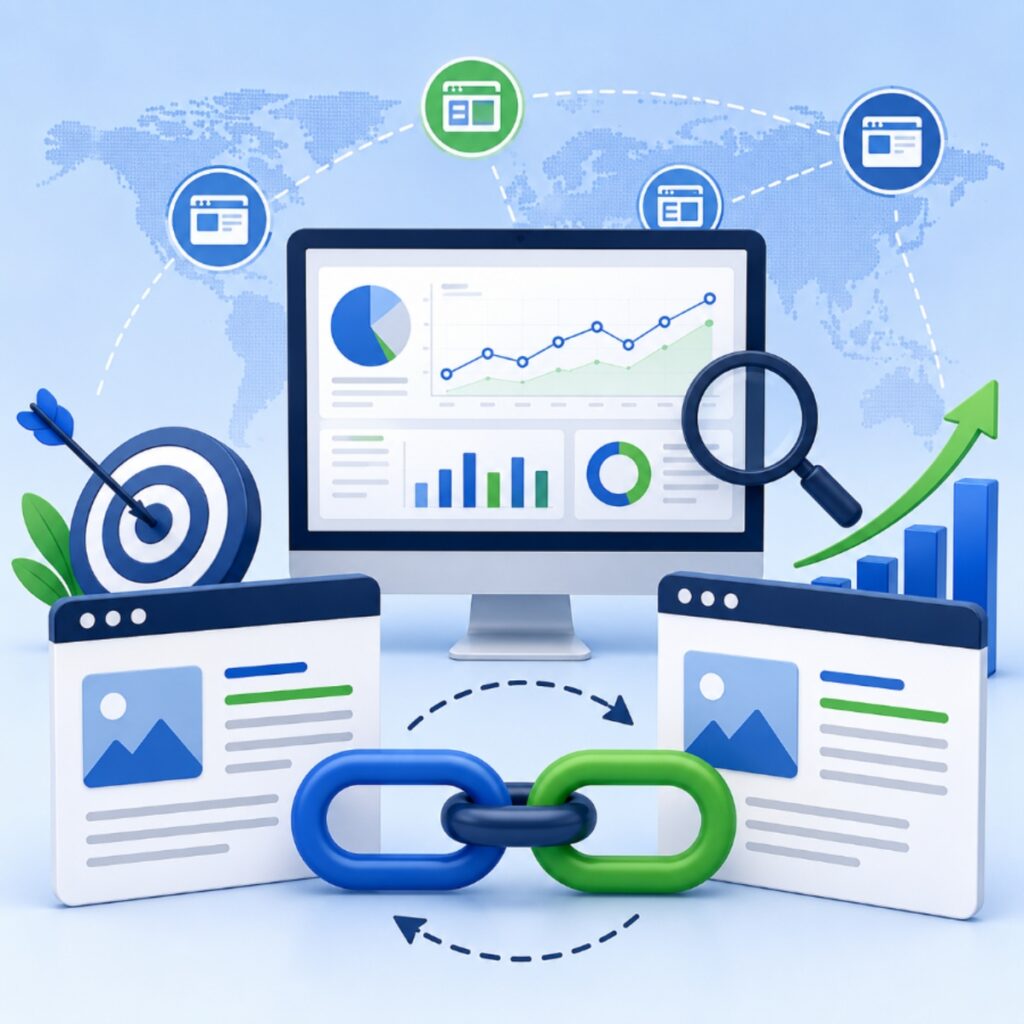
Link exchange is an SEO strategy where two websites agree to link to each other or collaborate on sharing valuable content. It has been used by marketers and website owners for years as a way to increase visibility, build relationships, and improve online authority. However, modern link exchange focuses less on simply swapping links and more on creating meaningful partnerships between relevant websites.
What Is Link Exchange?
Link exchange happens when two website owners agree to place links within their content that point to each other’s websites. For example, a marketing blog may link to an SEO tool, while that SEO tool may reference the marketing blog in another relevant article.
The main goal of a successful link exchange is to provide value to users while helping both websites gain exposure. When done naturally, these collaborations can support brand awareness, referral traffic, and stronger online relationships.
Why Does Link Exchange Matter for SEO?
Backlinks remain an important part of search engine optimization because they act as signals of trust and authority. When reputable websites mention and link to your content, search engines can better understand the credibility of your website.
A well-planned link exchange can help businesses:
- Increase referral traffic from relevant audiences
- Build relationships with industry professionals
- Improve brand visibility
- Discover new content promotion opportunities
- Strengthen website authority over time
However, quality matters more than quantity. A few relevant links from trusted websites are usually more valuable than many unrelated links.
How to Do Link Exchange the Right Way
Successful link exchange requires a strategic approach. The first step is finding websites that are relevant to your niche and share a similar audience. For example, an SEO agency may collaborate with marketing blogs, SaaS companies, or business technology websites.
When reaching out for link exchange opportunities, focus on creating value rather than only requesting a backlink. Offering useful content ideas, guest posts, expert contributions, or resource recommendations can make partnerships more effective.
It is also important to ensure that links are placed naturally within valuable content. A link should help readers discover additional information instead of appearing forced or unrelated.
Common Link Exchange Mistakes to Avoid
Although link exchange can be beneficial, poor practices can reduce its effectiveness. Some common mistakes include:
- Exchanging links with unrelated websites
- Creating excessive reciprocal links only for SEO purposes
- Using low-quality or spammy websites
- Adding links without considering user experience
- Focusing only on rankings instead of building relationships
A successful link exchange strategy should always prioritize relevance, trust, and genuine collaboration.
The Future of Link Exchange
The future of link exchange is moving toward relationship-based SEO. Instead of simple link swaps, businesses are building partnerships through content collaborations, industry discussions, digital communities, and resource sharing.
Platforms and communities that connect SEO professionals make it easier for marketers to find relevant partners and create meaningful collaborations. These networks help website owners discover opportunities while maintaining a focus on quality and relevance.
Final Thoughts
Link exchange can be a powerful SEO technique when approached correctly. The best results come from building genuine partnerships, sharing valuable content, and connecting with websites that are relevant to your audience.
Rather than viewing link exchange as a simple backlink transaction, businesses should see it as an opportunity to collaborate, grow visibility, and create long-term relationships within their industry.